This question comes up constantly, and the honest answer is that both are good. They're just good for different things. Sonos works beautifully in some homes and falls short in others. The same is true for built-in speaker systems. The difference comes down to your home, your budget, and how you actually use audio on a daily basis.
What Sonos Does Well
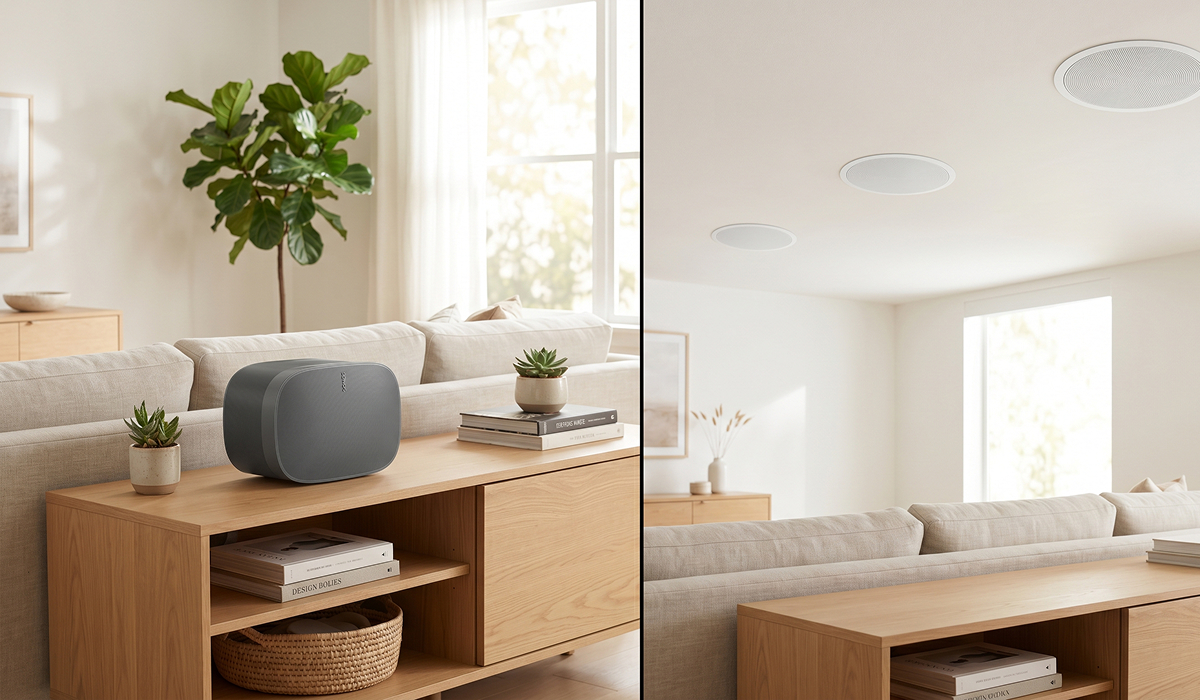
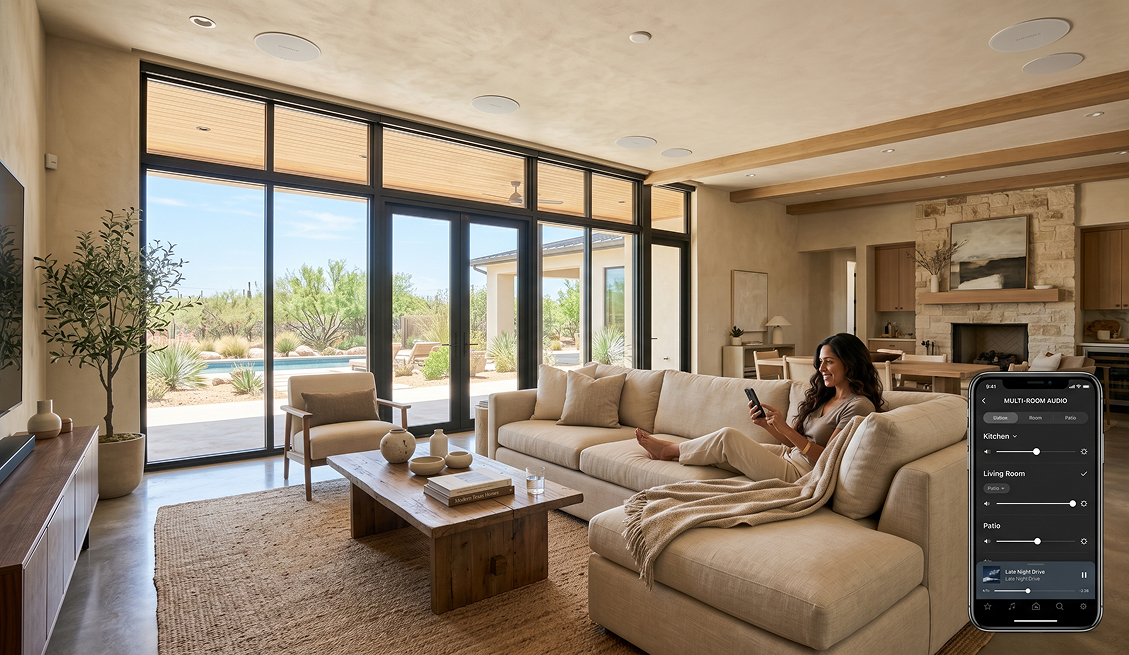
Sonos is a wireless whole-home audio platform. You buy speakers, connect them to your Wi-Fi, and control everything from the Sonos app on your phone. No in-wall wiring, no professional installation required for the basics, and no contractor scheduling. You can start with two speakers and keep adding as the budget allows.
The platform integrates with almost every major streaming service, works with voice assistants, and can connect to a broader smart home automation setup. For someone who wants whole-home audio without a significant installation project, Sonos is a genuinely strong option.
Sound quality is good. Not audiophile-grade, but absolutely fine for most living spaces. The Sonos Era 300 in particular handles spatial audio well for a standalone unit.
Where Built-In Speakers Have the Edge
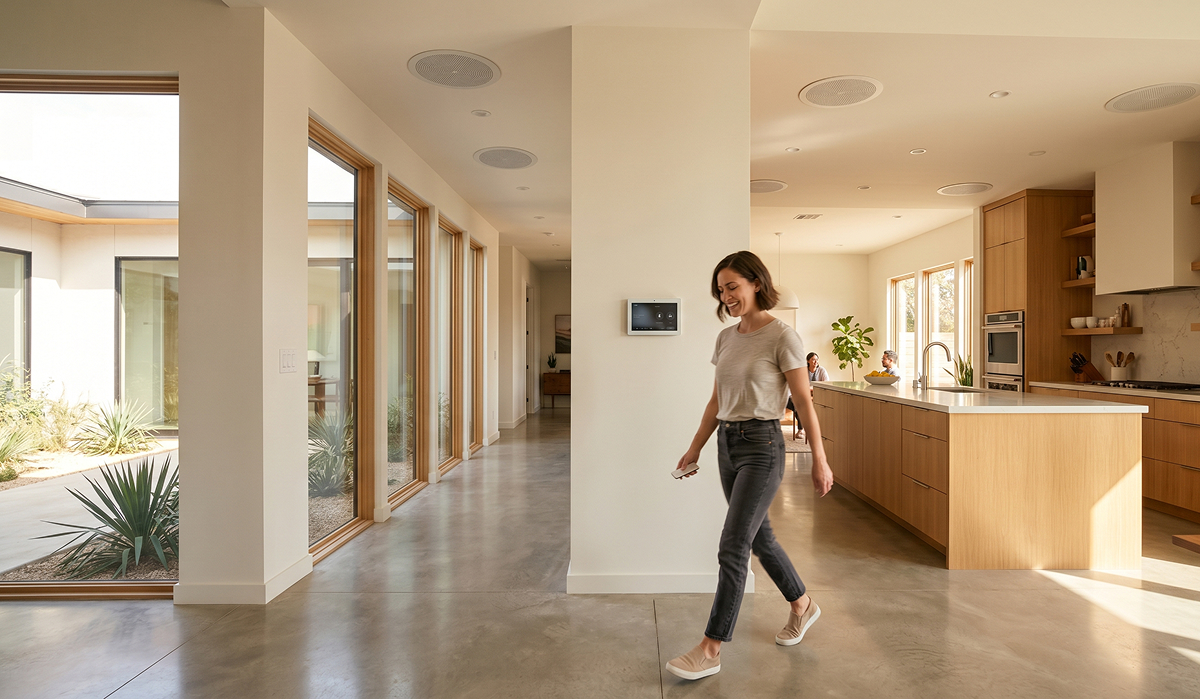
Built-in speakers are physically installed into your ceilings or walls and wired back to a central amplifier. The speakers themselves are invisible. You hear sound without seeing where it's coming from, which changes how a room feels. Audio fills the space evenly rather than projecting from a single point.
Sound quality at the same price point is higher with built-in systems. The amplifier handles the heavy lifting, and properly matched in-ceiling speakers in a treated room beat a wireless speaker on a shelf every time.
Built-in systems also scale better. Ten or twelve zones is very manageable on a wired system. Getting ten Sonos zones to play nicely together in a large home with thick walls or a crowded Wi-Fi environment takes more troubleshooting.
The Price Difference Is Real But Not as Big as You Think
Sonos hardware is not cheap. A well-equipped Sonos setup covering four or five rooms runs several thousand dollars in equipment alone. Built-in systems add installation labor and materials, but the per-room cost can actually be competitive with Sonos in a home where wiring is being done anyway during construction or renovation.
If you're already considering a full multi-room audio system for your home, the conversation about Sonos vs. built-ins is worth having with a professional before you commit to anything. The right answer depends heavily on your specific home.
Which Homes Are Best Suited for Each
Sonos fits well in rentals, apartments, existing homes where running wire isn't practical, and for homeowners who want flexibility to rearrange speakers over time. It's also a good fit if you want to add one or two rooms without wiring the whole house.
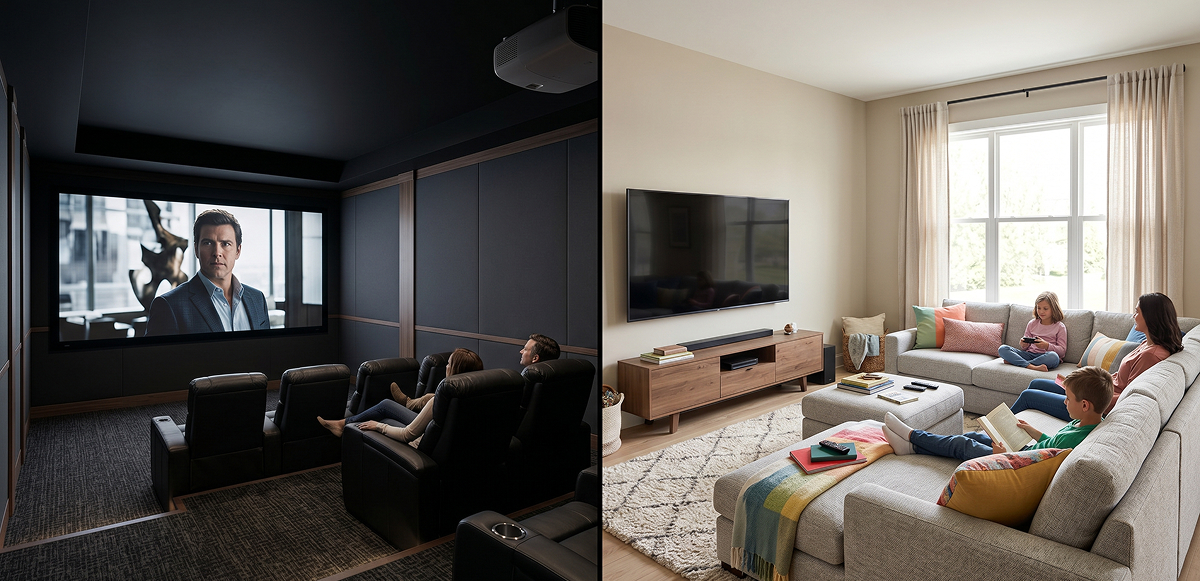
Built-in systems fit well in new construction, homes undergoing significant renovation, or any situation where you want a permanent, polished result. If you're planning an outdoor entertainment setup or a dedicated home theater, built-in components almost always make more sense than portable wireless speakers.
What Victoria TX Homeowners Tend to Choose
Homes in Victoria and the surrounding Crossroads area tend to run larger and include covered patios or outdoor kitchens as genuine living spaces. That pushes a lot of clients toward built-in systems, particularly when they're also interested in outdoor entertainment setups that need weather-rated speakers in ceilings and soffits.
That said, plenty of clients start with Sonos and upgrade later. We've helped with both, and we install and support both platforms.
Call AV Interiors TX at (361) 894-8308 to talk through which audio system fits your home. Or come visit our Victoria showroom and hear the difference in person before you decide.
FAQs
Is Sonos better than built-in speakers?
Neither is universally better. Sonos is more flexible and easier to install without in-wall wiring. Built-in speaker systems deliver higher audio quality, scale better across more zones, and work best in new construction or homes undergoing renovation.
How much does a Sonos system cost compared to built-in speakers?
A Sonos setup covering four or five rooms typically runs several thousand dollars in equipment. Built-in systems add installation labor and materials, but per-room costs can be competitive when wiring is part of a larger renovation project.
Can Sonos be integrated into a smart home?
Yes. Sonos works with most major smart home platforms including those used by AV Interiors TX, allowing music to respond to lighting scenes, voice commands, and automation triggers.